Why Pilates
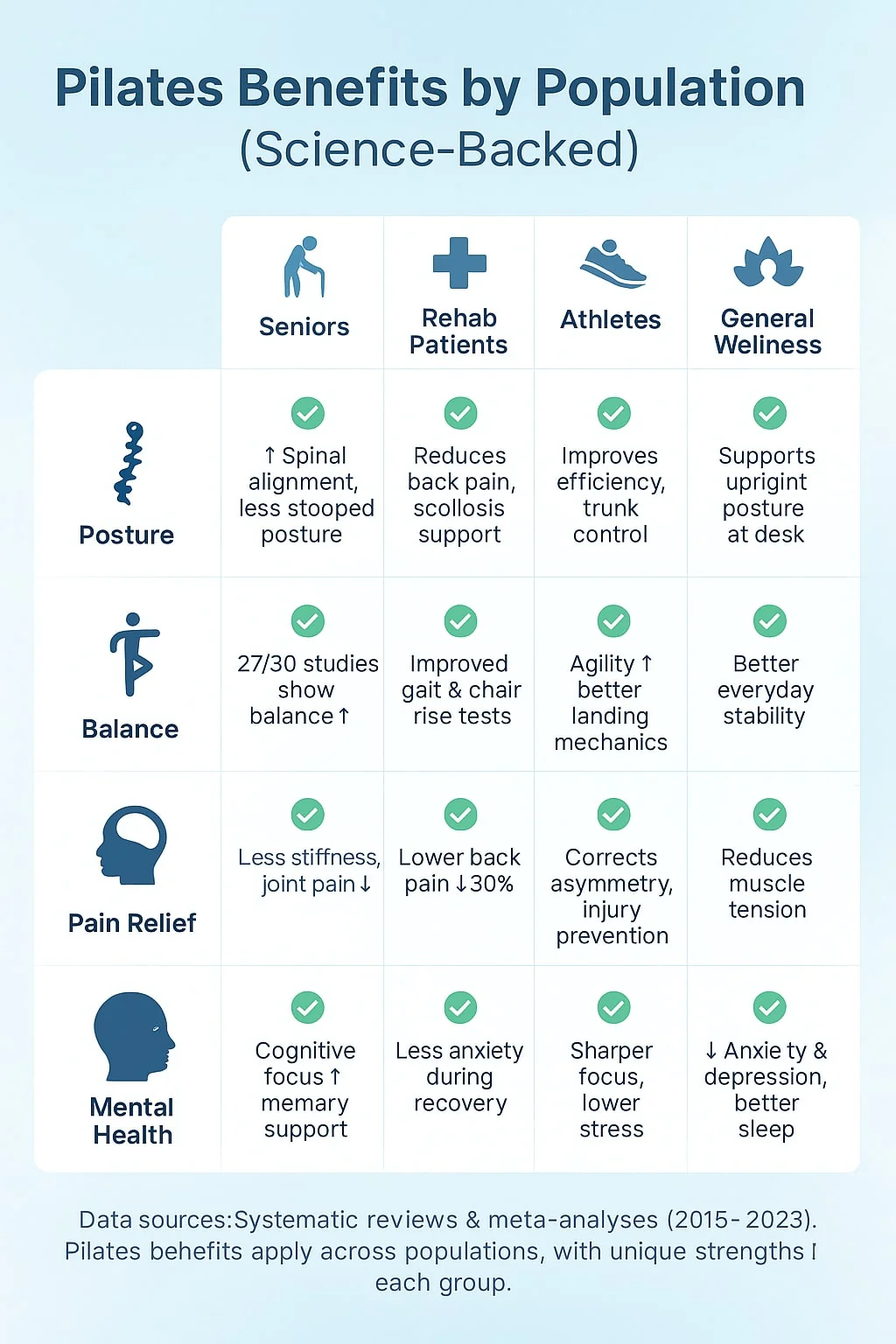
What does science say about Pilates? Research continues to highlight its benefits for physical strength, rehabilitation, and mental wellbeing.
Pilates Backed by Research
- Benefits of Pilates on Depression, Anxiety, and Stress: An Observational Study Comparing People Practicing Pilates to Non-Active Controls
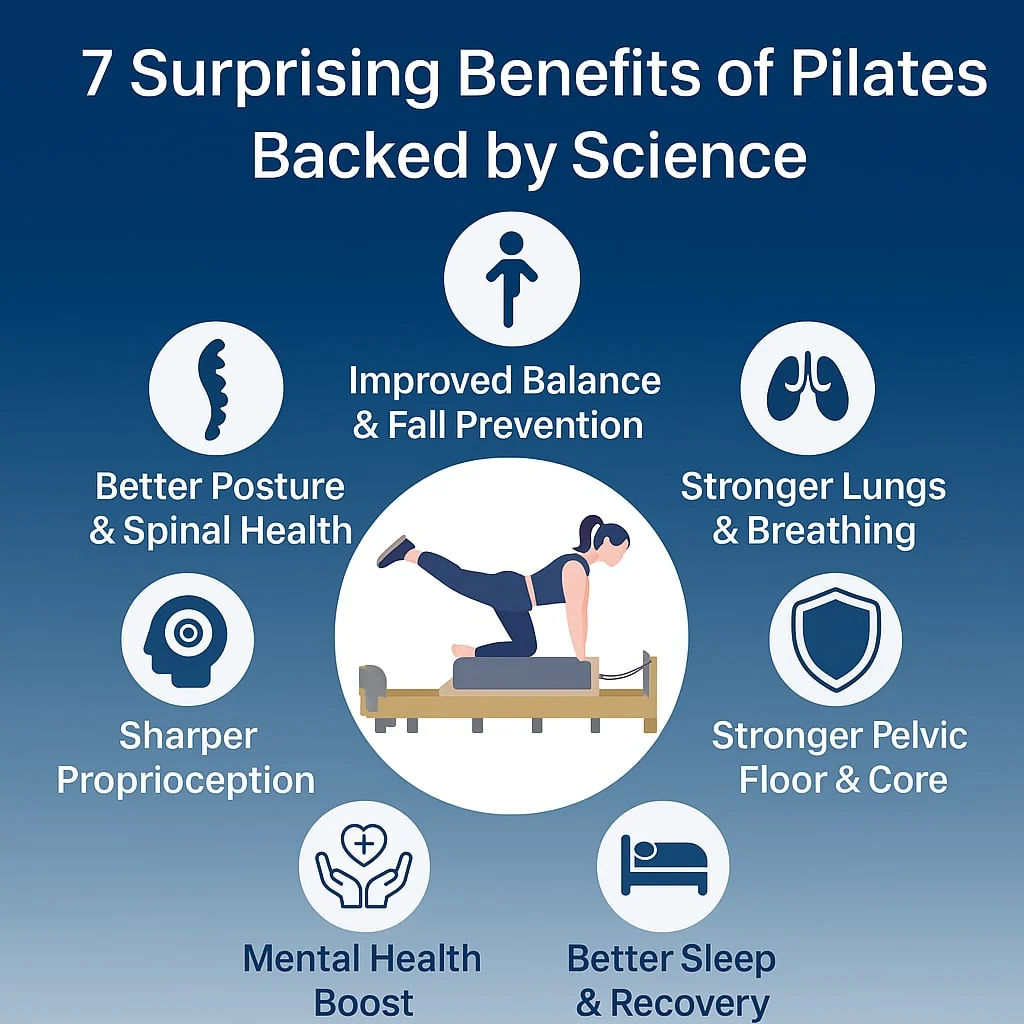
- 7 Surprising Benefits of Pilates Backed by Science Everyone Should Know
- Is Pilates an effective rehabilitation tool? A systematic review
- What is Pilates Good For? 19 Benefits
The Science of the Pilates
01.
Neuromuscular Re-Education
Pilates isn’t just about “abs”; it’s about the brain-to-muscle connection. By performing slow, controlled movements, you engage proprioception—your body’s ability to sense its position in space. Weekly practice strengthens the neural pathways between your brain and deep stabilizing muscles (like the transversus abdominis), leading to better balance and fewer falls as we age.
02.
Spinal Decompression & Fluidity
Unlike high-impact sports that can compress the intervertebral discs, Pilates focuses on axial elongation.
The Science:
By strengthening the deep stabilizers of the spine (the multifidus), you reduce the load on the spinal discs.
The Result:
This helps reverse the “slumping” effects of modern sedentary life and increases the circulation of synovial fluid in the joints.
03.
Hypertrophy of "Local" Stabilizers
Most gym workouts target “global” muscles (the ones you see, like biceps). Pilates targets “local” stabilizers.
The Mechanism:
Weekly sessions build endurance in Type I (slow-twitch) muscle fibers. These fibers are designed for postural support, meaning you’ll feel less fatigue simply standing or sitting throughout the day.
04.
Cortisol Regulation & The Breath
Pilates utilizes lateral thoracic breathing.
The Benefit:
This specific breathing pattern expansion of the ribcage encourages a full exchange of oxygen. More importantly, it stimulates the Vagus Nerve, which triggers the parasympathetic nervous system.
The Science:
This lowers cortisol (the stress hormone) levels, making a weekly class a literal “reset” button for your endocrine system.
Pilates Is More Than Just Exercise
Pilates combines controlled movement, breathing, and body awareness to improve strength, mobility, and mental focus. Scientific research continues to show that regular Pilates practice can support both physical rehabilitation and overall wellbeing.
Join us today!
Sign up to the S&G Pilates mail list for updates on upcoming classes, courses and events.